The Financial Conduct Authority (FCA) has highlighted figures from HMRC that show 760,000 matured Child Trust Funds, worth an average of £2,000 each, remain unclaimed. Child Trust Funds were designed to give a generation of children a financial head start. Eligible children born between 1 September 2002 (now aged 23 - 24) and 2 January 2011 (now aged 15) received a tax-free account seeded with Government money.
Anyone aged 18 or over with a matured Child Trust Fund can access their money, whether to help with study and living costs or to put some towards their long-term financial future.
Maike Currie, VP Personal Finance at PensionBee, comments: “September means back to school, college and university - new starts, new routines and, for many families, new costs. It’s also a great opportunity to talk about money and one of the biggest financial advantages we can give our children: starting early and giving their money time to compound.
“For some young adults, that conversation could start with £2,000 they didn’t even know they had. A forgotten Child Trust Fund could help with university costs, a first car or simply starting adult life. But if you don’t need the money today, think about what it could do for you tomorrow.
“A pension might be the last thing on an 18-year-old’s mind, but that’s precisely when time is most on their side. Once a Child Trust Fund matures at 18, the money belongs to the young adult. They could choose to withdraw some or all of it and contribute it to a pension, subject to the usual pension contribution and tax relief rules, giving that money decades to potentially grow.”
Could £59 a month turn into £1 million?
Parents of younger children could start even earlier. A Junior pension or SIPP allows you to contribute up to £2,880 net a year for a child with no earnings, with tax relief potentially taking that to £3,600 gross. You don’t have to contribute anywhere near that amount either. Small sums invested regularly can become surprisingly large when you give them enough time.
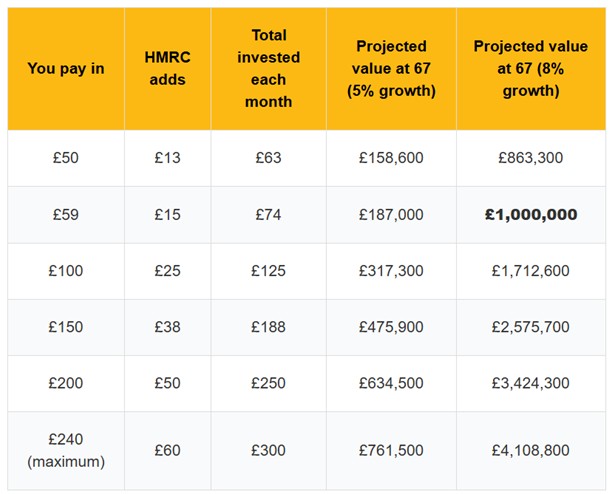
The table below shows what could happen if a family contributed to a Junior pension or SIPP every month from birth until age 18, stopped contributing at that point and left the money invested until age 67.
Under these assumptions, contributing just £59 a month from birth to 18 could result in a pension worth around £187,000 at age 67 assuming 5% annual growth, or around £1 million assuming 8% annual growth.
At £240 a month, a family would contribute £2,880 a year, with tax relief increasing the gross amount invested to £3,600. Under the same assumptions, this could potentially grow to around £761,500 at 5% growth or £4.1 million at 8% growth by age 67.
Tax relief figures are rounded. *£240 a month is the monthly equivalent of the £2,880 net annual contribution that can normally receive tax relief for a child with no relevant UK earnings. Figures assume contributions are made from birth until age 18, with no further contributions thereafter and the money remaining invested until age 67. Projections assume investment growth of either 5% or 8% a year, after a 0.70% annual management fee. These are illustrations only. Investment returns are not guaranteed and actual outcomes may be higher or lower.
Currie continues: “The million-pound figure is eye-catching, but that’s not really the point, the real lesson is what time can do. Contributing £59 a month is less than £2 a day from the family, with tax relief adding to the amount invested. Start when children are young and keep going until 18 and then leave that money alone - a Junior pension or Sipp gives them 50 years or more for the investment returns to compound with tax relief boosting every eligible contribution along the way. Whether you're saving for their first steps into adulthood or helping them build financial security for later life, starting early means time can do more of the heavy lifting.”
|