GlobalData’s Insurance Database estimates that the Hong Kong property insurance industry will register an annual growth rate of 8.7% in 2026, supported by frequent catastrophic events, regulatory upgrades to fire safety, and product innovations. Recent catastrophe experience is likely to reinforce underwriting discipline and rate momentum into the next cycle. Reinsurance has cushioned primary carriers but is resetting market terms. However, rising fire losses are expected to halt reinsurance price softening and prompt strict treaty structures and tighter exposure controls.
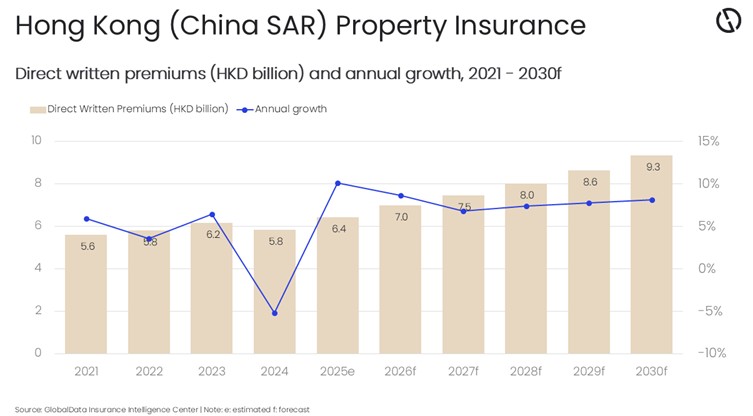
Swarup Kumar Sahoo, Senior Insurance Analyst at GlobalData, comments: “The Hong Kong property insurance market is expected to grow during 2026–30 as insurers reprice fire risk, refine catastrophic accumulation, and expand digital distribution. This growth relative to the broader general insurance market’s 6.3% CAGR trajectory implies a stronger expansion profile for property lines.”
The deadly Wang Fuk Court apartment complex fire in late 2025 crystallized risk accumulation in high-rise estates and triggered industry-wide operational responses. Meanwhile, ongoing climate-related events such as typhoons and black rainstorms have reinforced the case for comprehensive coverage and tighter underwriting. Looking ahead, premium hardening in fire-related lines and stricter treaty terms are expected to support growth as insurers reprice for severity risk, enhance risk management, and lean on strong reinsurance programs and capital buffers to sustain capacity for property risks.
Insurers in Hong Kong faced record catastrophe payouts and higher loss costs due to severe weather conditions. Property damage claims remain a major concern among general insurance lines, alongside personal accident & health (PA&H) and liability. Despite catastrophe losses in 2025, the property insurance combined ratio is expected to be at 84.8%, keeping the sector profitable.
Sahoo adds: “While insured losses in Hong Kong were manageable, regional catastrophic events continue to test capacity and accelerate innovation. Insurers are expected to reassess risk retention, reduce capacity for higher-risk profiles, and increase deductibles, especially for high-rise and renovation exposures.”
With premium increases anticipated for fire-related policies and stricter exposure controls post-event, property lines are set for pricing-led growth as underwriters refine deductibles, exclusions, and retention strategies in response to frequency and severity risk in dense urban settings. Stable capitalization, reinsurance utilization, and regulatory reforms anchor market resilience. While the growth of property insurance will be supported by a strong reinsurance hub in the country, the new risk-based capital regime and progress on IFRS 17 will bolster financial discipline.
Sahoo continues: “Alternative risk transfer and capacity-building will support property risk appetite. Catastrophe bonds will reinforce regional coverage for perils including typhoons and earthquakes, while government incentives on extended insurance-linked securities (ILS) grant schemes and streamlined financing for subcontractors will help stimulate issuance. Captive market growth will strengthen enterprise risk retention strategies and diversify capacity supporting complex commercial risks. Hong Kong’s growing ILS platform, emphasis on climate resilience, and regional DRF cooperation highlight the role as a risk-transfer hub that can mobilize capital and analytics to close protection gaps.”
Coordinated relief measures, including premium holidays, advance payments, simplified documentation, and emergency support, were rolled out rapidly by insurers, bancassurance partners, and regulators to reduce immediate financial strain and maintain coverage for impacted policyholders of the Tai Po fire. Such proactive actions foster consumer confidence and support industry growth.
Sahoo concludes: “Hong Kong’s property insurance market is transitioning into a higher-quality growth phase. The catastrophe experience in 2025 is catalyzing disciplined underwriting, reinsurance recalibration, and stronger risk selection, while regulatory fire-safety upgrades and resilient housing activity have deepened protection. With reinsurers absorbing a material share of extreme losses and capital levels remaining sound, carriers are positioned to pursue sustainable growth during 2026-30.”
|











