The research, covering a broad spectrum of more than 2,000 people over the age of 18, was completed at the end of 2023. Conducted annually, the research seeks to understand how the British public feel about the pensions industry and aims to establish how much the industry is trusted, and what level of confidence people have that their retirement needs and objectives will be met by the pensions industry. Using a scale of 0 to 10 with 0 being ‘not at all’ and 10 being ‘a lot’, the public are asked to rate their trust in the pensions industry.
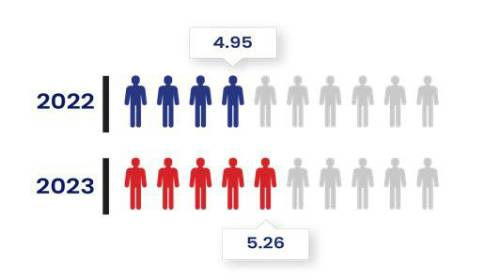
The top line figure for the survey shows trust in the pensions industry has increased to 5.26 out of 10 in 2023, up from 4.95 in 2022.
This continues the trend of year-on-year increases with the 2021 score being 4.63 and 2020 being 4.46. Overall, this represents a total increase of 18% since 2020.
Breaking down those scores a little more there is an overall reduction in negative scoring with ‘do not trust at all’ down 1.8% and ‘don’t trust much’ down 1.3% - a combined 3.1% fall in negative trust responses. Unlike previous years, this has not simply moved to moderate scoring, as ‘to some extent’ has also fallen by 3.5%. This has meant significant increase in votes for the positive scores of ‘a reasonable amount’ (5.8%) and ‘a lot’ (0.9%) – a combined 6.7% higher. This continued trend now means that only 22% don’t have any or much trust in the pensions industry.
Daniel Taylor, Client Director at Trafalgar House, commented: “Whist it is certainly encouraging to see a positive headline figure and a growth in public confidence over the last four years, we must remain mindful that this is a nuanced picture as the survey also reveals underlying concerns. For example, when asked how their trust in pensions affects how they feel about their level of savings for retirement, almost 6 in 10 people still say the industry has no impact on their retirement savings. This clearly indicates that, for most, pensions are not being considered as the predominant retirement plan.”
Taylor added: “The picture is also complex when it comes to member attitudes. Although the lower negative trust score is good, this hasn’t translated into a broader positive feeling about retirement prospects. For trust in the industry to have negative or no impact on people's savings habits is a dark cloud over the industry that needs to change. “
|