As thousands of students prepare to head to university in the coming weeks, new analysis from the retirement specialist Standard Life highlights the financial trade-offs facing parents who want to help to meet the cost. With student debt attracting renewed attention amid rising tuition fees and fresh debate over the interest charged on student loans, Standard Life finds that 11% of parents financially supporting their adult children are helping with university fees to reduce their child’s student debt.
However, parents looking to shield their children from borrowing could risk putting their own retirement finances under pressure. With maximum tuition fees in England now £9,790 a year for the 2026/27 academic year, and living costs adding significantly to the bill, the headline cost of a three-year degree can now reach around £90,000, or more than £106,000 in London.
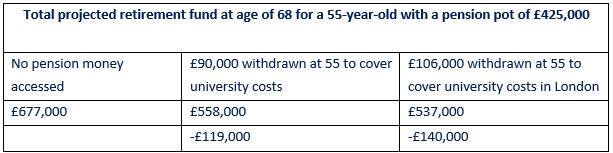
Standard Life analysis finds that a parent aged 55 who withdrew £90,000 from their pension - equivalent to the potential cost of a three-year university degree - could reach retirement with £119,000 less in their pension pot.3 For those covering the equivalent cost of studying in London, the potential retirement hit rises to £140,000. The findings come as nearly three quarters (74%) of parents providing financial support to adult children say doing so has affected their own finances.
The hidden cost of dipping into a pension
The figures are based on an individual who, at the age of 55, has a pot of £425,000 – just large enough to cover the potential full headline cost of a three-year degree from their pension tax-free cash. If they accessed no pension money until the age of 68, they could build up a pot of £677,000 by the age of 68, allowing for inflation.
If they withdrew £90,000 at age 55 to cover the cost of a three-year degree outside of London, this could reduce their retirement fund at 68 to £558,000 in today's prices - £119,000 less than if the money had remained invested. Someone withdrawing £106,000 to cover the cost of studying in London could see their retirement fund fall to £537,000, a difference of £140,000.
While the remaining pension savings could continue to grow, the money that has been withdrawn would no longer be invested and so would miss out on potential growth in the years leading up to retirement. As a result, some of the reduction in the pension pot is potentially recovered through future investment returns, but not enough to fully offset the impact of the withdrawal without significantly increasing contributions later on.
*assuming salary of £50,000 at the age of 55, 3.50% salary growth per year, and 5% a year investment growth. 7% employer and 7% employee pension contributions. Figures account for 2% inflation. Annual Management cost of 0.75%.
Neil Jones, Tax and Estate Planning Specialist at Standard Life, said: "It's understandable that many parents look at the size of student loan balances today and want to do everything they can to help their children avoid taking on that debt. Concerns about the interest charged on student loans have also added to the debate about whether young people are getting value from the current system. And, with unspent pension pots set to fall within the scope of inheritance tax from April 2027, gifting money to children during their lifetime could be a sensible estate planning strategy for some parents.
"At the same time, it’s important to remember that student finance works differently from most other forms of borrowing. Repayments are linked to earnings rather than simply the amount owed, so paying off or avoiding student debt altogether won't always deliver the financial benefit families might expect.
"Pension savings are different - money withdrawn today is no longer there to benefit from future investment growth, and for people approaching retirement there may be limited time to rebuild what has been taken out. Major life moments often involve balancing competing financial priorities. Supporting children through university can be incredibly rewarding, but it's important that parents also consider the impact on their own long-term financial future. Taking time to understand the trade-offs can help families make decisions with greater clarity and confidence, while helping to protect their long-term financial security and the retirement they are working towards.”
|