|
|




 |  |  |  |
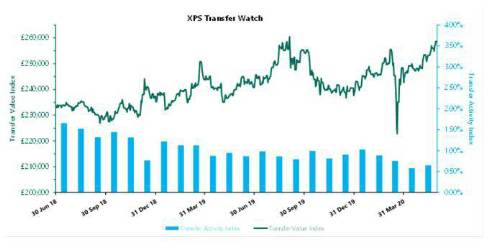
Defined benefit (DB) transfer values increased by nearly 4% during May; and the number of members taking a transfer value rose slightly from the record low observed in April, according to XPS Transfer Watch. XPS Transfer Watch monitors how market developments have affected transfer values for an example member, as well as how many members are choosing to take a transfer. |
XPS Pensions Group’s Transfer Value Index increased steadily throughout May, finishing the month at £258,600, up from £249,300 at the end of April. This increase was a result of a rise in long-term inflation expectations during the month. The index is now only marginally lower than the record value of £260,422 observed on 3 September 2019. XPS Pensions Group’s Transfer Activity Index rebounded from the record low of 0.58% set in April, with the number of completed transfers increasing to an annual equivalent of 0.65% of eligible members. This represents just over 6 in every 1,000 eligible members transferring each year. In market news, the Financial Conduct Authority (FCA) has confirmed that it will ban contingent charging for pensions transfer advice from 1 October 2020, in all but a small number of circumstances. The ban has been designed to address the FCA’s long-standing concerns about conflicts of interest arising from advice fees that are dependent on transfers proceeding.
Mark Barlow, Partner, XPS Pensions Group commented: “Transfer values rose during May as we saw long-term inflation expectations return to pre-lockdown levels. We also saw a small uptick in transfer activity during May which may be a result of those schemes who initially paused transfers restarting quotations. At XPS, around 25% of schemes we work with paused transfers initially but our most recent survey in mid-May showed only 6% continue to suspend quotations.
“The ban on contingent charging has been expected for some time. We are generally supportive of this change, as it will remove a potential conflict of interests from advisors. However, it could lead to worse outcomes in the short-term as members find it difficult to take advice, either because they are unwilling to pay upfront advice fees or due to a shortage of capacity as firms withdraw from the market.” |
|
|
|
| Pricing Actuary | ||
| London - £120,000 Per Annum | ||
| Pricing Transformation Lead | ||
| London - £85,000 Per Annum | ||
| Head of Capital | ||
| London - Negotiable | ||
| Portfolio Actuary | ||
| London - £140,000 Per Annum | ||
| Deputy Head of Capital | ||
| London - £140,000 Per Annum | ||
| Senior Pricing & Portfolio Management... | ||
| London - £150,000 Per Annum | ||
| Pricing Transformation Lead | ||
| London - £85,000 Per Annum | ||
| Lead Capital Actuary | ||
| London - £150,000 Per Annum | ||
| Take the lead on capital oversight | ||
| London / hybrid 2 days p/w office-based - Negotiable | ||
| Be at the forefront of creative GI co... | ||
| London/hybrid 2-3dpw office-based - Negotiable | ||
| Remote Market and Credit Risk Calibra... | ||
| Remote - Negotiable | ||
| Contact us about a Capital Contract i... | ||
| London / hybrid 2 days p/w office-based - Negotiable | ||
| Head of Insurance Risk | ||
| London - £160,000 Per Annum | ||
| Director - Pensions Risk Transfer (PRT) | ||
| London, Midlands, North West - hybrid working 2dpw in the office - Negotiable | ||
| Dip a toe into public sector work wit... | ||
| Flex / hybrid 2 days p/w office-based - Negotiable | ||
| P&C Consultant | ||
| London / hybrid 3dpw office-based - Negotiable | ||
| Take the lead client-facing projects ... | ||
| Various locations - Negotiable | ||
| Choose Life! Choose a major global co... | ||
| Various locations - Negotiable | ||
| Actuarial skillset? Apply now for Snr... | ||
| South East / hybrid with travel requirements - Negotiable | ||
| Financial Risk Leader - ALM Oversight | ||
| Flex / hybrid - Negotiable | ||




Be the first to contribute to our definitive actuarial reference forum. Built by actuaries for actuaries.
Copyright © 2026 Actuarial Post. Created by Zero-One Design Ltd