Nearly two-thirds of the value of a typical pension pot comes from investment growth, but three quarters (75%) of people don’t realise it, according to new research from the retirement specialist Standard Life.
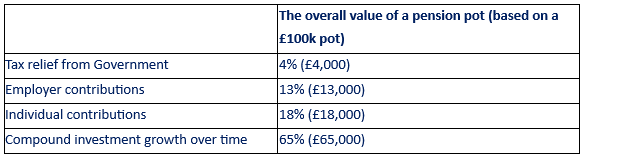
Standard Life analysis of government figures highlights that, while contributions from individuals and employers form the vital foundation of pension saving, investment growth can play an even greater role over the long term. For a typical defined contribution pension pot of £100,000, around two thirds of the total value (65% / £65,000) comes from compound investment growth. Individual contributions account for £18,000, employer contributions make up £13,000, and tax relief adds £4,000.
Despite investment growth playing such a valuable role in terms of pension pot growth, many people are unaware of its significance in dictating the final pot. Only one in four (25%) people believe investment growth is the main driver of the final value of their pension pot. Instead, two fifths (39%) believe their individual contributions make the biggest difference, while a quarter (27%) point to employer contributions, and almost one in ten (8%) identify tax relief as the main driver.
A pension is a long-term investment. Its value can go up as well as down and could be worth less than was paid in.
Time could be your pension’s biggest advantage
This misunderstanding comes as many people are delaying retirement planning altogether. Just 15% say they actively prioritise saving into their pension, while one in five (21%) admit they see retirement planning as something to worry about later. This rises to more than a third (35%) among Gen Z, despite younger savers potentially having the most to gain from giving their pension longer to grow.
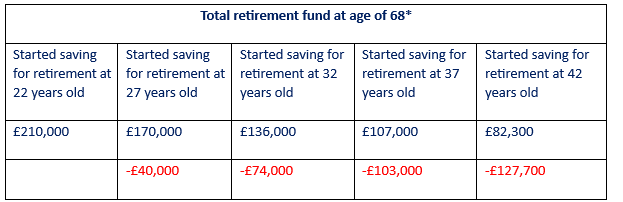
Someone who starts working on a salary of £25,000 and pays minimum monthly auto-enrolment contributions (5% employee, 3% employer) from age 22 could build a total retirement fund of £210,000 by age 68, adjusted for inflation3. Waiting just five years until age 27 to start contributing could result in a total pot of £170,000, £40,000 less, with the money having less time to realise compound investment growth.
*assuming 3.50% salary growth per year, and 5% a year investment growth. Figures account for 2% inflation. Annual Management cost of 0.75%.
Jenny Holt, Customer Savings & Investment Director at Standard Life said: “Compound investment growth can be one of the most powerful forces in pension saving, but our research suggests many people underestimate the role it plays. Contributions are important, but the real benefit often comes from giving those contributions time to grow and generate returns over decades.
“This is why starting early can make such a difference. Even modest contributions made earlier in your working life have longer to benefit from potential compound investment growth, while delaying saving can mean missing out on the years when your money could have been working harder for you.
“Of course, people need to balance pension saving with day-to-day costs and shorter-term goals, especially in the current high cost of living environment, but where finances allow, engaging with your pension early, checking what is going in, and making the most of any employer contributions available can help give investment growth the best chance to boost your retirement savings over time.”
|