|
|





 |  |  |  |
Aviva research reveals 15% of drivers surveyed don’t think they need to tell their insurer of a change of address. Mistakes could leave millions of UK drivers potentially uninsured. With more than seven in ten (71%) drivers unsure about key aspects of car insurance, Aviva debunks common car insurance myths, from failing to update personal details to a change in estimated annual mileage |
New research from Aviva reveals one in seven (15%) drivers may have incorrect addresses on their motor insurance. This is particularly high amongst young motorists aged 18-24-years-old, with more than one in three (37%) not knowing they need to tell their insurer about a change of address.
As a result, drivers may not be able to make a claim should the worst happen, potentially leaving them to cover repair costs, replacement cars, damage to other vehicles or property, or legal expenses.
Other misconceptions around car insurance include needing to declare a change of job (61%), changes in estimated annual mileage (39%), changes in where the car is kept overnight (26%) and declaring who the correct main driver is (16%). The research comes as more than seven in ten (71%) drivers are unclear about the changes they need to declare to their insurer.
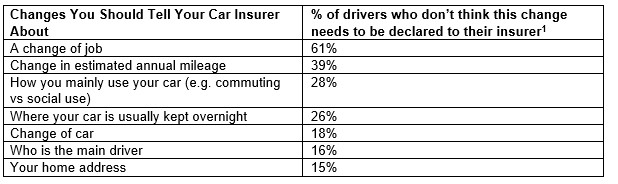 Please note this is not an exhaustive/exclusive list
James Driscoll, Motor Claims Manager at Aviva, said: "Car insurance is based on the information drivers provide, so it's important that insurers are made aware of any changes as soon as they happen. This includes things like a change of address, which 15% of people surveyed were unaware needed to be declared to their insurer. While some changes may seem minor, failing to keep your details up to date could affect your cover and, in some cases, lead to difficulties when making a claim. If in doubt, it’s worth contacting your insurer directly to make sure they have the correct information on file. "
Aviva’s dos and don’ts on what changes should be shared with your insurer include:
1. DO let your insurer know if your job changes.
Aviva's research found that fewer than two in five drivers (39%) correctly identified that this type of change should be reported to their insurer, making it one of the least well-understood policy updates among those surveyed.
In some cases, drivers may need a specific type of insurance. For example, drivers who start using their car for deliveries, courier work, transporting passengers, or regular business travel will need additional cover beyond standard social, domestic and commuting use.
2. DO update your insurer if your annual mileage changes.
Annual mileage is another factor insurers will consider when assessing risk, as the more time the car spends on the road, the greater the likelihood of being involved in an incident. Despite this, just over three in five drivers (61%) correctly identified that changes in annual mileage must be reported to their insurer.
3. DO tell your insurer if you change your car.
Changing your car is one of the most important updates to share with your insurer, as details such as the car’s make, model, value, performance and repair costs can all affect the level of risk associated with it. Despite this, almost one in five drivers (18%) don’t think they need to tell their insurer when changing cars. A new car can have very different characteristics from the one previously insured, and failing to update your insurer could lead to unnecessary complications if you need to make a claim.
4. DO tell your insurer if you change where you usually keep your car overnight.
Where the car is normally kept overnight is another detail drivers may overlook, as more than a quarter of drivers (26%) think they don’t need to tell their insurer if this information changes. Yet the location where the car is parked – whether on a driveway, in a garage, on the street or in a secure car park – can affect the likelihood of theft, vandalism or accidental damage. If you move home or start keeping your car in a different location, it's important to update your insurer.
5. Don't let your MOT expire.
Almost a quarter of drivers (24%) are unaware that driving without a valid MOT could invalidate their insurance or affect their ability to make a claim. As well as being a legal requirement for most vehicles over three years old, an MOT provides evidence that a vehicle meets minimum roadworthiness standards. If a vehicle is involved in an incident without a valid MOT, insurers may investigate the circumstances and whether the vehicle's condition contributed to the accident. Failing to keep an MOT up to date could result in a claim being reduced or declined, leaving drivers facing unexpected costs.
6. DO update your insurer about car modifications, even if they don’t affect the performance of the car.
Aviva's research found that just over two in five drivers (41%) believe modifications only matter if they affect the performance of the car. Although this can impact your insurance, it might not necessarily increase your premium. Before making any changes to your car, it's smart to understand how they might affect your insurance and discuss them with your insurance provider to ensure you have the right cover.
7. Do tell your insurer if the main driver of the car changes.
Insurers need to know who uses the car most often, as this information forms an important part of their risk assessment. However, 16% of drivers do not believe they need to tell their insurer if the main driver of the car changes. This could happen when a child starts regularly using the family car, a partner becomes its primary user, or ownership of driving responsibilities shifts over time. Providing incorrect information about who drives the car most frequently is sometimes referred to as "fronting" when a lower-risk driver is named as the main driver despite another person using the car most often. Whether intentional or unintentional, this is a form of insurance fraud through misrepresentation of the risk. It is important to declare all details accurately and honestly as providing misleading information could invalidate your policy.
8. DO tell your insurer about incidents, even if you don't make a claim.
Even minor incidents can be relevant to your insurer, regardless of whether a claim is made. However, over half of drivers (58%) correctly recognised that they should inform their insurer about a minor collision or an event which results in little or no damage, even if they do not make a claim. If you're involved in an incident, it’s essential that you notify your insurer, even if you intend to cover any costs yourself – which is a condition on most insurance policies.
9. DO check your details at renewal.
Drivers are responsible for ensuring their details, and those of anyone else driving the car, are accurate and that nothing has changed at renewal. Despite this, over half of drivers (57%) surveyed thought insurers will spot any missing or outdated information at renewal and more than four in five (81%) believed no action is needed if nothing has changed. Failing to do so could mean outdated or incorrect details remain on a policy, potentially affecting cover and causing difficulties if a claim needs to be made.
10. DON’T assume insurance issues can't affect future policies.
Nearly half of drivers (46%) believed that having invalid insurance would only affect their current policy and would not impact their ability to take out a new policy with another insurer in future. However, insurance history is an important factor when arranging cover, and past issues - such as having a policy cancelled by your current provider - may be considered by insurers when assessing future applications.
|
|
|
|
| Reserving Actuary | ||
| London - £120,000 Per Annum | ||
| Qualified Pricing Actuary, Property | ||
| London - £140,000 Per Annum | ||
| Specialty Pricing Actuary (Part time ... | ||
| London - £125,000 Per Annum | ||
| Pricing Actuary | ||
| London - £180,000 Per Annum | ||
| Actuary - Financial Planning & Analysis | ||
| London/Hybrid - Negotiable | ||
| Capital Actuary | ||
| London/Hybrid - £100,000 Per Annum | ||
| Reserving Actuary | ||
| London - £120,000 Per Annum | ||
| Pricing Actuary, Marine Cargo/Property | ||
| London - £130,000 to £150,000 Per Annum | ||
| Pricing Actuary – Cyber | ||
| London - £120,000 Per Annum | ||
| Reinsurance Pricing Actuary, Analytics | ||
| London - £130,000 to £180,000 Per Annum | ||
| Reinsurance Pricing Actuary | ||
| London - £140,000 Per Annum | ||
| Head of Capital | ||
| London - £170,000 Per Annum | ||
| ART Pricing | ||
| London - £100,000 Per Annum | ||
| Pricing Transformation Actuary | ||
| London - £130,000 Per Annum | ||
| Pricing Actuary | ||
| London - £80,000 to £120,000 Per Annum | ||
| Pensions on Divorce Startup - Flexibl... | ||
| Remote - Negotiable | ||
| SVP, Head of Reserve Forecast Analytics | ||
| Bermuda - £200,000 Per Annum | ||
| START-UP, Lead Reinsurance Actuary | ||
| London - Negotiable | ||
| Senior Actuary | ||
| London - Negotiable | ||
| Reserving Manager | ||
| London - £130,000 Per Annum | ||




Be the first to contribute to our definitive actuarial reference forum. Built by actuaries for actuaries.
Copyright © 2026 Actuarial Post. Created by Zero-One Design Ltd