Standard Life is calling for the Government’s “say what you pay” approach to pay transparency1 to be extended to workplace pensions, with businesses required to display both pay and pension contributions on job adverts.
Lack of visibility around workplace pension contributions during the recruitment process has become a major barrier to engaging people with their long-term finances. Half (49%) of UK adults say that having the employer’s pension contribution displayed on job adverts would prompt them to engage more with their retirement finances. This rises to 60% among Millennials and 57% among Gen Z.
The need for greater visibility comes as awareness of workplace pension contributions is low. Almost two-thirds (64%) of UK workers do not know how much, or even if, their employer pays into their pension. Just 23% of UK adults consider workplace pension contributions as part of their overall remuneration when applying for a role, while two in five (39%) do not think about their pension contributions at all2.
A number of employers, including Standard Life, already make their pension contributions visible on job adverts. The call is for that good practice to become the norm rather than the exception.
Andy Briggs, Group Chief Executive Officer of Standard Life, comments: “Short and long-term finances go hand in hand, so while employers will soon have to “say what you pay” for salary, we think this should extend to pensions too. People wouldn’t consider taking a new job without knowing what they will be paid, but many have little idea what their employer is contributing towards their retirement. Pay and pension should be viewed on equal footing if we are to help people achieve better outcomes and greater financial security in later life.
“Making pension contributions more visible on job adverts and recruitment materials is a simple but meaningful step towards empowering people to engage with their financial futures.
“And we also want employers to think about the level of support they provide. For those that can, going beyond minimum pension contributions can make a big difference to their retirement income over the course of a working life. Greater engagement also needs to be backed by adequate contributions.”
Adequacy alongside visibility
The latest figures estimate around 15 million UK adults are currently under-saving for retirement4. Standard Life strongly believes that increasing minimum automatic enrolment contributions from 8% is necessary to help millions avoid falling short in retirement. For employers in a position to do more now on a voluntary basis, increasing contributions from the default minimum will help to close saving gaps.
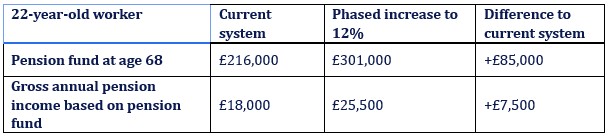
Standard Life analysis shows that a phased increases to auto-enrolment contributions, like those implemented in Australia, could leave a young worker with £85,000 more in pension savings and enough income to meet the Moderate Retirement Living Standard5.
The Living Pension accreditation, by the Living Wage Foundation, recognises employers that commit to helping their employees build adequate retirement savings, with a minimum total pension contribution of 12% of salary6.
Three in five (57%) UK adults say they would have a more positive view of an employer if they knew they offered a Living Pension, while over two in five (46%) say they would be more likely to apply for a job with such an employer.
As one of the first employers to achieve Living Pension accreditation and the first corporate sponsor of the initiative, Standard Life is encouraging employers who can to progress towards the Living Pension standard, helping their employees build greater long-term financial security.
Catherine Foot, Director at Standard Life’s Centre for the Future of Retirement said: “We need to make it easier for people to see what they’re saving for retirement but also ensure they’re saving enough. We’re expecting the final recommendations from the Pension Commission early next year followed by a response by the government in the spring. Auto-enrolment is in scope of this but any change to increase minimum contributions will likely be in a controlled and gradual way, as has been done in Australia, to ensure it is sustainable for individuals and businesses.
“Employers that can go further today by increasing contributions will make a real difference to their employee’s future retirement. We would encourage those who can to progress towards the Living Pension standard to do so. Having this accreditation could help differentiate themselves in terms of recruitment and retention, while also going a long way to improving the future financial security of their employees.”
Living Wage Foundation Co-Director, Emily Sawh, said: "A decent job should provide security both now and in the future. The Living Pension recognises employers who are helping workers build the savings they need for later life through a contribution level that supports a dignified standard of living in retirement.
"We're delighted to have Standard Life's support for the Living Pension and welcome their efforts to raise awareness of the importance of building adequate retirement savings. Greater awareness can help more people engage with their future finances and better understand the support available to them at work."
|