New research from TPT Retirement Solutions indicates that defined benefit (DB) trustees continue to face significant cost pressures, with the scale of reported cost increases varying across schemes.
Trustees reported an average increase of 34% in running costs over the past 12 months, with the findings published in the second Insight Report from the TPT Retirement Solutions: DB Trustee Pulse 2026*. This year’s findings remain relatively consistent with the 2024 iteration of the research, when responding trustees reported average cost inflation of 37%, indicating that cost pressures remain a significant issue for many UK DB schemes.
Legal services were identified by 37% of trustees as the area seeing the largest absolute cost increase, followed by technology and data services (34%). However, analysis of the findings suggests that cost pressures facing schemes are broad-based as opposed to being driven by one dominant factor: governance and administration services were both cited by 28% of trustees, while major project undertakings such as GMP equalisation or Pensions Dashboard preparation, alongside covenant services, (also both 27%) all ranked close behind.
Cost pressures diverge with larger schemes reporting the steepest rises
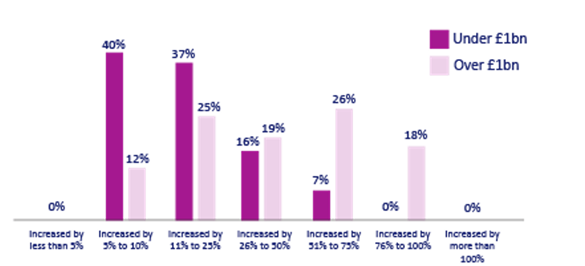
Trustees across both scheme-size groups reported rising costs, with the largest increases more commonly reported by trustees overseeing larger schemes (see Graph 1).
The research showed that almost half (44%) of trustees overseeing schemes with £1bn or more in assets reported running cost increases of more than 50% over the past year, compared with just 7% of those overseeing schemes below that threshold.
The divergence was even more pronounced at the upper end of the range: none of the trustees overseeing schemes below £1bn in assets reported cost increases of over 76%, compared with almost one in five (18%) trustees managing schemes with assets above that threshold.
Jonathan Jackaman, Head of Client Relations at TPT Retirement Solutions said: “Rising scheme costs are no longer simply a budgetary concern but instead, are becoming a strategic challenge for trustee boards to navigate. Trustees are spending more on the building blocks of good governance, from legal support and administration to data and governance itself. And the data suggests that size alone does not insulate schemes from these pressures, with the steepest increases being reported among the larger schemes that responded.
“For some trustee boards, consolidation can be one way to manage that complexity more efficiently working to reduce duplication, improve cost certainty and provide access to specialist capabilities at scale. The aim is not simply to cut costs, but to ensure trustee time and scheme resources are focused where they can have the greatest impact on long-term strategy in order to improve outcomes and continue delivering for members.”
|