New research from Barnett Waddingham (BW), part of Howden, highlights that many workers in the UK are still unclear on salary sacrifice – despite it being one of the most widely used workplace benefits.
While nearly two-thirds (62%) of workers say they are using salary sacrifice, a similar number (63%) don’t know it will be capped in 2029, limiting how much can be paid through salary sacrifice without National Insurance being applied.
With changes to salary sacrifice actively being debated in Parliament, this highlights a clear disconnect between how widely it is used and how well workers understand potential changes coming down the line.
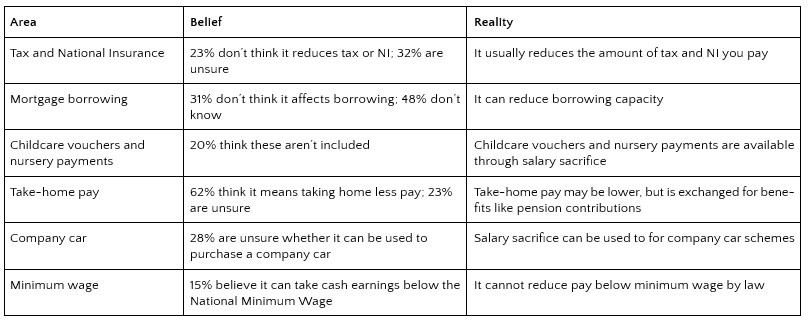
The findings also show how many workers are unclear on what salary sacrifice can be used for, and how it could affect their finances. One in five (20%) believe it can only be used for pension contributions, despite it also being used for a range of other benefits, including childcare support and company car schemes.
Understanding also varies across multiple aspects of how salary sacrifice works, from how it impacts take-home pay to misconceptions about whether it can bring your income below the National Minimum Wage.
Mark Futcher, Head of DC Pensions at Barnett Waddingham, part of Howden, comments: “For a benefit so widely used, most people are still using salary sacrifice on autopilot without knowing what’s going on under the bonnet. For something that can make a big difference to people’s long-term savings, that gap really matters. Adding a cap, regardless of the amount, adds another layer of fine print to a system that already feels a bit opaque for most people. And when the rules become harder to understand, people are more likely to step back than engage – a risk we can’t really afford to take at a time when retirement adequacy is already under pressure.
“There’s a balance to strike here. Salary sacrifice works best when it’s simple for workers to understand, and easy for employers to run. If that balance tips too far towards complexity, there’s a risk a well-used and effective benefit becomes less accessible than it should be.”
|