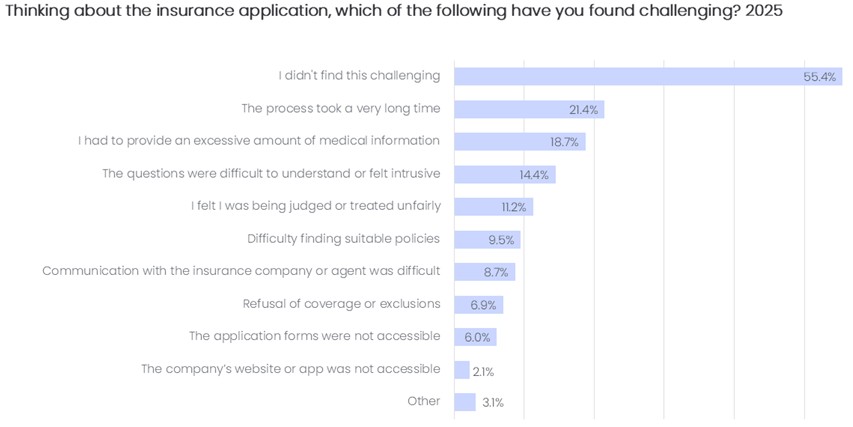
According to GlobalData’s 2025 UK Insurance Consumer Survey*, 10.9% of consumers with a disability or long-term health condition cite having previously been denied insurance. Moreover, close to half of vulnerable customers find the insurance application challenging.
The time to complete the application (21.4%) is the most common complaint, but respondents also feel particularly uneasy about the amount of medical information they must disclose (18.7%), while also feeling the questions were either difficult to understand or felt intrusive (14.4%).
Beatriz Benito, Lead Insurance Analyst, GlobalData, comments: “Vulnerable customers are especially susceptible to detriment because of their personal circumstances, which can include long-term illness, mental illness, or physical disability. While an insurer can demand forms that ask for more detailed information from a customer with a long-term illness and/or impairment, they cannot make the form longer or more complex than necessary. Yet the high proportion of vulnerable customers who found the application process difficult or intrusive signals that insurance firms may not be offering adequate support. Insurers could offer guided assistance to those requiring help when completing a written application form.”
The Financial Conduct Authority requires firms to take reasonable steps to ensure vulnerable customers receive fair treatment. Companies are expected to make reasonable adjustments to enable disabled customers to access products and services more easily.
Benito adds: “If an insurer refuses cover, they must provide a clear, justifiable reason for the decision in writing; such a decision should not be based on prejudices or assumptions. Insurers should also be flexible to accommodate the specific needs of customers, for example by offering phone applications for customers who struggle with written forms. There needs to be a fine balance between getting the right level of information without making customers feel judged, overwhelmed, or treated unfairly. Forms should be designed with plain and concise language and follow a logical structure. Meanwhile, vulnerable customers should not have to repeat the same information multiple times across different stages or agents.”
Further data from GlobalData’s 2025 UK Insurance Consumer Survey* reveals the magnitude of the problem, as 18.7% of consumers consider themselves as having a disability or long-term health condition.
Benito concludes: “This possibly masks the real figure, as many vulnerable customers may not recognize or may not identify their own vulnerability, as well as the importance of insurers being able to recognize a vulnerable customer from the first touchpoint. Staff should be trained to listen actively, speak clearly, and show empathy to provide more positive experiences, transparency, and tailored support.”
|











