Analysis of the latest DWP annual research on trends in workplace pension participation by Broadstone, reveals that women continue to lag behind men in workplace pension saving, despite some progress in narrowing the gender pension contribution gap.
Across all employees, the median male saver contributed £4,430 to their workplace pension in 2025, £310 more than the £4,120 saved by the median female employee.
Encouragingly, this contribution gap has halved in the last six years, from £680 in 2019, when the median male saver contributed £4,660 and the median female saver contributed £3,980. However, whilst the gap has narrowed, progress has begun to slow in recent years, with the gap standing at £360 in both 2023 and 2024 – just £50 more than the latest gap.
The impact of lower pension contributions can extend well beyond working years. A £310 annual difference in pension saving would amount to £12,400 in missed contributions over a 40-year career. Assuming annual investment growth of 5%, the effect of lost compound growth means this could leave someone with around £37,500 less in retirement savings.
Kelly Parsons, Head of DC Proposition at Broadstone, said: “While it is encouraging to see the gap between male and female pension contributions gradually narrowing, women are still saving significantly less into their workplace pensions, leaving many at greater risk of poorer retirement outcomes.
"This isn't just a question of engagement. Women are more likely to take career breaks to care for children or family members, work part time, or reduce their hours during different stages of their careers. These interruptions can have a lasting impact on pension contributions and limit the additional savings accrued by long-term investment return growth.”
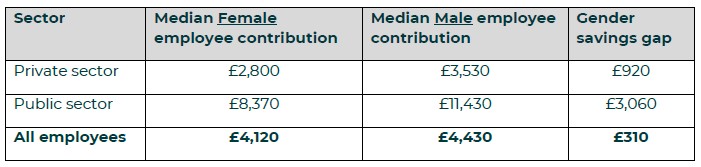
The median private sector female employee contributed £2,800 to their workplace pension in 2025, almost a thousand pounds less - £920 - than the £3,530 contributed by the median private sector male employee. In the public sector, the savings gap was significantly larger at £3,060, with the average female employee contributing £8,370 in 2025, compared to the £11,430 saved by the average male employee.
Female employees remain less likely to opt out of workplace pension saving than men. In the latest quarter (Q3 2025/26), 10.3% of auto-enrolment (AE) eligible female employees opted out of their workplace pension scheme, compared with 13.3% of AE-eligible male employees. However, opt-out rates have risen for both groups over the past year, increasing from 8.6% to 10.3% for women and from 11.5% to 13.3% for men (Q3 2024/25).
Kelly Parsons added: "Employers are in a strong position to help close this gap. Clear, targeted communications around the value of pension saving, encouraging both private and public sector employees to review and increase contributions following pay rises or after returning from parental leave, and providing access to financial education can all make a meaningful difference.
"Creating a workplace culture where pensions are discussed more openly and employees are supported to make informed decisions won't eliminate the structural challenges overnight, but it can help more women stay on track for a better retirement.”
|