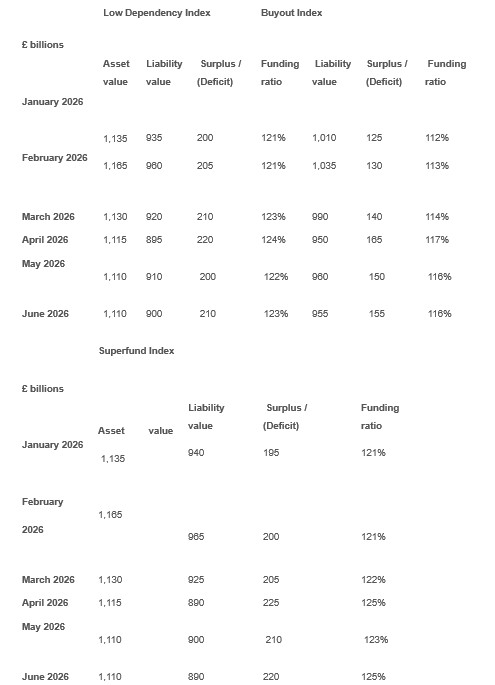
As of 30 June 2026, PwC estimates that UK DB schemes held assets totalling £1,110 billion against liabilities of £900 billion on a low dependency measure. This represents a surplus of £210 billion and a funding ratio of 123%, maintaining the robust funding position seen over recent months despite continued economic uncertainty and market volatility.
Meanwhile, PwC's Buyout Index, which tracks the estimated cost for UK defined benefit pension schemes to fully insure their liabilities through an insurance buyout, showed an estimated surplus of £155 billion, with schemes totalling an aggregate position of 116% funded.
PwC's Superfund Index also remained robust, with an estimated surplus of £220 billion and a funding level of 125%, highlighting the continued strength of alternative endgame solutions.
This strength has been consistent throughout 2026, with low dependency and buyout measure consistently exceeding 120% and 110% respectively, alongside a general upwards trend.
Saye Mkangama, Pensions Partner at PwC UK, said: "With funding levels remaining strong, the government's surplus release consultation marks an important step towards making surplus release a practical option for well-funded schemes. That greater clarity is already influencing market sentiment, with around two-thirds of trustees, sponsors and industry professionals responding to PwC polling saying the consultation and The Pensions Regulator's (TPR) statement have increased their confidence in running on schemes and releasing surplus.
"The focus now turns to translating that confidence into action. Government and TPR have an opportunity to create a practical framework that gives trustees and sponsors the certainty to make informed decisions while maintaining appropriate member protections. If achieved, the new flexibilities could allow well-funded schemes to put surplus capital to more productive use without compromising members' security."
The PwC Low Dependency Index, Buyout Index and Superfund Index figures are as follows:
|