More than a quarter of mass affluent UK adults (29%) have increased their workplace pension contributions over the last year, according to new research from Raymond James.
In this year’s edition of Raymond James’ Money Milestones campaign, the wealth manager looked into what mass affluent individuals - those who have a pre-tax salary of at least £39,000 and £1,000 in accessible cash or savings - have been doing with their pensions in the last year and why.
The findings reveal an ongoing shift towards long-term wealth building. In addition to boosting their workplace pension savings, 24% of respondents increased contributions to personal pensions, while 9% made significant lump-sum payments to accelerate their funds.
Younger demographics are driving this momentum, as 37% of Gen Z and Millennials respectively have managed to increase the amount they contribute to their workplace pension over the last 12 months. Those on their journey to retirement are also contributing more, with 28% of Gen X stating they have increased their workplace pension contributions, compared to only 7% of Baby Boomers.
Growing a pension remains one of the most tax-efficient ways to save for the future over the long term, and one in thirteen people (7%) have paid a lump sum into their workplace pension in the last year. Whether savers are increasing their regular workplace contributions or injecting a lump sum, these proactive steps provide a vital financial boost well ahead of reaching retirement age, helping to build a robust financial safety net.
Increasing contributions to a workplace pension as opposed to a SIPP may mean employees can benefit from matched employer contributions, National Insurance relief and higher tax-rate relief, as well as making it an easier, automated process for contributing. Looking at the reasons why people are contributing more towards their workplace pension, the main drivers are:
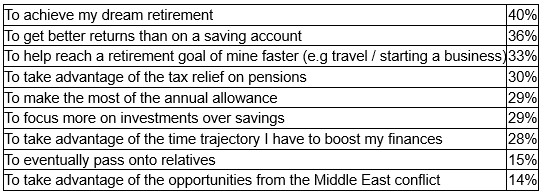
The main driver for consumers raising their workplace pension contributions is to achieve their dream retirement (40%). Younger individuals are more conscious of this, with 44% of Millennials increasing their pension contributions to achieve their dream retirement, followed by 41% of Gen Z. 25% of Gen Xs, and 24% of Baby Boomers have done the same to give them a financial boost ahead of reaching retirement age. Many people are also looking to boost their savings to reach their retirement goals faster, with 33% of surveyees increasing their workplace pension payments to do so, while 28% did so to take advantage of the time trajectory they have remaining.
Harry Bell, Director of Financial Planning at Raymond James, comments: “It is encouraging to see savers taking control of their financial futures, with younger generations leading the charge. With nearly three in ten people ramping up their pension payments and more than a third of Gen Z and Millennials doing so, we are witnessing a shift towards proactive wealth creation earlier in life.This is especially critical with the state pension legislation up for debate.
“This trend reflects a broader recognition that building wealth requires long-term commitment. Over a quarter (28%) of Brits are intentionally shifting away from traditional cash deposits to focus on investments that offer genuine growth potential against inflation.
“Crucially however, the data shows that pensions must be re-evaluated as personal retirement income rather than a tax-free estate planning tool. The findings suggest some savers may still be viewing pensions as a potential estate planning tool despite the proposed changes to pension inheritance tax treatment, continuing to overfund their pots with the goal of eventually passing this on to relatives. With incoming changes bringing unused pensions into the scope of Inheritance Tax, that strategy may become less effective under the proposed changes, meaning individuals should consider other tax-efficient options if their objective is to pass wealth to future generations. By making the most of the pension tax reliefs today, individuals can fund their dream retirement while alive, but must look to other, more tax-efficient avenues if looking to build a financial legacy for their family."
|





.jpg)







(2).jpg)