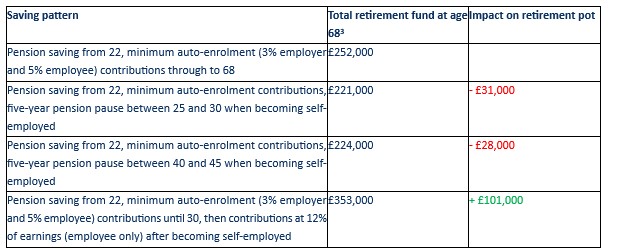
A five-year pension pause after becoming self-employed could reduce a retirement pot by around £31,000
Increasing contributions to 12% after becoming self-employed could boost a retirement pot by around £101,000 versus minimum auto-enrolment saving
As more workers consider leaving office-based careers, driven by uncertainty around the impact of AI and automation as well as the potential to earn more in skilled trades, new analysis from retirement specialist Standard Life suggests they should also consider the long-term impact on their retirement savings, particularly if the move involves becoming self-employed.
Standard Life research found one in three (33%) people reduced, paused or stopped pension contributions after becoming self-employed, while almost one in five (18%) increased them - showing both the risk and the opportunity that can come with changing how you work. Its modelling also shows the scale of the choice - increasing contributions to 12% after becoming self-employed could result in a retirement pot around £101,000 larger than continuing to save at minimum auto-enrolment levels.
Self-employment is far from universal among tradespeople, but it is particularly common in construction, which includes many skilled trades. Around 36% of the construction workforce works for itself, compared with 13% of workers overall. That shift can change the retirement saving equation. Employees may benefit from automatic enrolment, employer contributions and payroll deductions, while people who work for themselves need to arrange and fund pension saving independently.
The wider picture for self-employed savers is challenging. The Pensions Commission has described self-employed pension participation as one of the most urgent issues facing the UK pensions system, with just 4% of the approximately 2.4 million people relying solely on self-employment income currently saving into a pension.
Cath Sermon, Head of Public Engagement and Campaigns at the Standard Life Centre for the Future of Retirement, comments: “Most people expect to change career or reskill at least once in their lives. With the world of work changing quickly, and new technologies reshaping the skills people need, it’s understandable that more people are thinking differently about their future careers. Skilled trades can offer an attractive route for those looking for practical, purposeful work, but any career change works best when people understand the financial and practical considerations as well as the opportunity.
“Switching careers to a skilled trade may involve becoming self-employed. This can bring new responsibilities, from managing income and costs to planning for the longer term, particularly if you’re no longer automatically contributing to a workplace pension. Thinking these things through early can help people make career changes with more confidence and build a working life that supports their future as well as their present.”
How leaving payroll can reshape retirement saving
Those choices can become significant over time. A five-year pause after becoming self-employed could reduce a retirement pot by tens of thousands of pounds, while taking active steps to increase contributions could have the opposite effect.
Standard Life modelling shows someone saving from age 22 on a salary of £30,000 at minimum auto-enrolment levels (3% employer and 5% employee contribution) could build a retirement fund of around £252,000 by age 68. If they paused contributions for five years between ages 25 and 30 after becoming self-employed, this could fall to around £221,000 - a £31,000 reduction. A five-year pause between ages 40 and 45 could result in a pot around £28,000 smaller, at £224,000.
By contrast, someone who saved at minimum auto-enrolment levels from age 22 before becoming self-employed at 30, then increased contributions to 12% of earnings, could reach age 68 with around £353,000 - approximately £101,000 more than if they had continued saving at minimum auto-enrolment levels throughout.
Figures are shown in today’s prices and are illustrative only. Modelling assumes pension saving starts at age 22 on a salary of £30,000, with annual salary growth of 3.5%, investment growth of 5.0%, inflation of 2.0% and an annual investment charge of 0.75%. Actual outcomes will depend on individual circumstances, contribution levels, investment performance, charges and inflation.
Emma Furlonger, managing director workplace and intermediary at Standard Life, said: “Moving into a skilled trade can be a hugely positive career choice and, for some people, it can bring a pay rise. However, it may also mean becoming self-employed, and there is an important pension trade-off to understand. Leaving employment can mean leaving behind employer contributions and the automatic saving habit that comes with payroll deductions, where pension contributions are taken directly from pay before it reaches your bank account. Without that structure, self-employed workers need to make an active decision to set money aside for retirement.
“The wider picture on self-employed pension saving is concerning, and the Pensions Commission has rightly highlighted it as a major challenge. Our research reflects that risk, with one in three people reducing, pausing or stopping pension contributions after becoming self-employed.
“At the same time, changing how you work can be a natural point to take stock. Almost one in five people in our research increased their pension contributions after becoming self-employed, showing that the transition can also prompt people to take more control of their retirement planning. One useful approach is to build pension saving into your day rate or the price of each job, just as you would account for tools, a van, insurance or other costs of working for yourself. A higher day rate is not directly comparable with an employed salary if the latter also comes with an employer pension contribution.
“There may also be periods when contributions need to reduce, particularly while someone is retraining, buying equipment or establishing a business. The important thing is to make that a conscious decision, with a plan for when and how contributions will increase again. Even relatively short gaps can have a significant impact when you factor in the investment growth those contributions could have generated over several decades.”
Emma’s top pension tips for self-employed tradespeople
1. Build your pension into your day rate: “A higher day rate is not directly comparable with an employed salary. Employees may receive pension contributions from their employer as part of their overall package, while someone who is self-employed must provide for their own retirement saving. When deciding what to charge, consider factoring pension saving into your rate from the outset and setting aside a proportion of each payment or invoice.”
2. Make pension saving work with an irregular income: “Income can fluctuate when working for yourself, particularly in the early years. Pension contributions do not necessarily have to follow a rigid pattern. Some people may find it easier to maintain a manageable regular contribution and make additional payments following stronger months or once they have a clearer picture of their annual income. Pension contributions can also benefit from tax relief, subject to the relevant limits and individual circumstances.”
3. Have a plan for the start-up years: “Retraining, buying tools or equipment, purchasing a van and establishing a customer base can all put pressure on finances when starting out. If pension saving needs to be reduced or paused temporarily, decide in advance when it will be reviewed and what would trigger an increase. A short-term pause can otherwise easily become a much longer one.”
b “Someone moving into a trade may already have several workplace pension pots from previous employers. Keeping contact details up to date, understanding where existing pensions are held and reviewing how they are invested can make it easier to see the bigger retirement picture. This can also help prevent valuable pension savings from being forgotten as people move between different careers and ways of working.”
|